
There comes a point in life when asking the question what it all means and why are we here inevitably leads a human being to ponder the very nature of existence itself. Many often wonder if it is worth living a just and noble life when the unknown realities of eternity give no clear answer post-death to establish meaning apart from oblivion. Such questions have reverberated through society since the time of antiquity, and in our media and consumerism-saturated world today, it can even border on cliche to consistently discuss both existentialism and nihilism in an open forum. But much like the rise of filmmaking in the early 20th century, existential nihilism began to flourish more throughout both the East and West as two gruesome, devastating World Wars played out before the halfway mark of the century. The sheer weight of the unimaginable horrors combined with the alarming loss of life provided a stark depiction of the absurdly precious, incredible fragility and brevity of the human lifespan itself. Both the good and virtuous and the insidiously evil died in equal measure. In post-World War II film and television, existential nihilism has been better represented through anti-heroes/heroines as opposed to heroes and heroines since morally ambiguous characters can better represent nihilistic impulses and more well-rounded subjects of human nature as opposed to existentialism alone delegating virtuous protagonists to unredeemable victims that simply suffer for their cause before death.
Existential nihilism is rooted within the scientific certainties of the here and now, which is to say that what we do not know beyond what we experience is shrouded in mystery. This modern philosophical merging of the two theories is essentially a rebuke against human-designed faith and spirituality, which are concepts that can only exist within the corporeal world in tandem with the worst and the best examples of human behavior. Death is the unifying mystery that binds together all living things behind the mystery that occurs now of death. Existential nihilism allows what we can see, hear, and experience to exist as the only certainties, which is to say that perhaps there is nothing beyond the loss of life and the decay of biological life, which are things we can see and observe.
Nihilism as a philosophical construct grew out of Nietzsche’s writings concerning the futility of knowledge, belief, value, and the bleak pointlessness of living a life revolving around these concepts since death was an eternal oblivion, no matter the focus of an individual’s life. Nihilism questions even the central foundations of epistemology itself by stripping away the futility of seeking to find meaning in human nature and life, since all the answers end with an unknowable foundation of why existence is what it is. Within a nihilistic worldview, the actions and thoughts of the individual are only ever remembered in the guise and interpretations of fellow living individuals or individuals reading insights after the death of another individual. In terms of an outer truth or a main truth, divine creator, judge, or analytical framework for a promise of eternity, nihilism rejects that which cannot be seen, felt, or experienced during life.
Existential nihilism is the theory that is sometimes used to combine two philosophical principles that are similarly intertwined. Although an existentialist can differ widely from a nihilist, the combination of the two philosophies is most represented in works of art and media storytelling. In modern interpretation, the outlook of the existential nihilist has most commonly been characterized as an individual with an overly pessimistic and cynical view of humanity, but this misses some of the wider insights found within dual philosophy. The existential nihilist does possess traits of those commonly attached labels, yet their existence is more accurately defined within a world that has no intrinsic purpose due to the eternal state of death once it occurs. The existential nihilist does not always have to be defined by a label related to pessimism and cynicism, or misanthropy; it is their view of everything that occurs during life that is ultimately without meaning. If oblivion is the answer to what transpires now of death, a life defined by rigid and constricting principles is pointless. Everything is pointless.
One of the most prolific examples of existential nihilism in art has been in cinema, with a focus on how filmmakers managed to get their bold projects financed amidst a sea of harsh criticism and apathy towards the societal status quo being one of the most preeminent examples of bold artistic statements managing to flourish thanks to filmmaker ingenuity and perseverance. Although artwork and even music contain numerous examples of existential nihilism, cinema represents a powerful outlook for the philosophy as its earliest origins correspond to the development of the philosophy itself in the twentieth century.
The History of Existential Nihilism Through Anti-Heroes and Anti-Heroines
It is unknowable how existential nihilism began in cinema. It can be said that Orson Welles’ seminal Citizen Kane (Welles 1941) was in many ways Hollywood’s first foray into an existentialist framework. At its heart, Citizen Kane is a film about the disintegration of the human soul. Orson Welles loosely based the character on William Randolph Hearst, who was very like Charles Foster Kane, the film’s ambiguous anti-hero. Thematically, this is a quintessential film that examines wealth, power, reaching the top of the mountain, yet still having to confront the philosophical fabric that forms our subconscious and very being. An existentialist interpretation of the sled, called Rosebud, is that it is the one human link to this man’s past that he holds onto as his ambition and greed accelerate the direction of his entire life (Welles, 1941). A need to hold onto the past, and to recapture a time of innocence and inexperience, represents existentialism’s wish for simplicity that can never be recaptured once an assessment of life’s brevity and hardships sets in. But the German Expressionists were shifting towards a more analytical framework of nothingness and disarray long before the often genre-driven Hollywood filmmakers introduced such bold themes and concepts into American cinema.
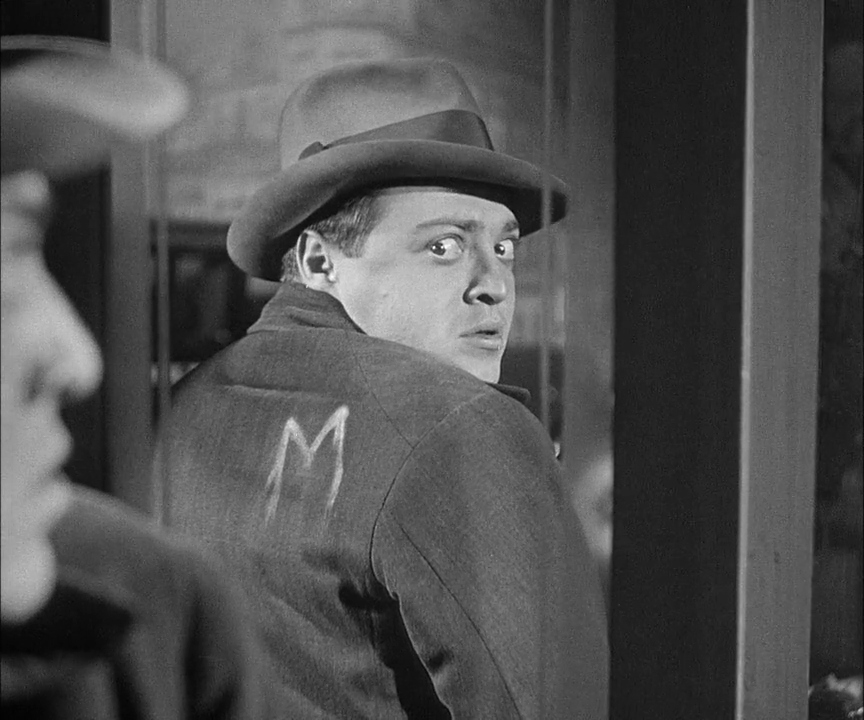
Fritz Lang was a German auteur filmmaker who helped give early credence to filmmaking as a true and viable art form. Lang was a filmmaker who was never afraid to turn his camera to marginalized sectors of society and even criminals and other types of personalities that may never have occurred to be viable for exploration in cinemas before his unique and totally subversive style of storytelling came to fruition. Lang’s German Expressionism combined these subversive elements with stunning technical attributes in lighting and photography. One only must consider the way that he lights and frames a film like M (Fritz Lang, 1931), in which actor Peter Lorre’s expressions are highlighted in a way that highlights the character’s insanity but also his difference in normal society. The need to destroy the other and banish the subversive occurs often in stories of anti-heroes. A child rapist is in no way a hero of any kind, but the bloodlust exhibited by the crowds yearning for Lorre’s character’s execution firmly pins the anti-hero lens on society itself (Lang, 1931).
Once the ravages of World War II concluded in 1945, Italian Neo-Realism came to the forefront in Italian and European cinema. European filmmakers such as Roberto Rossellini, Vittorio De Sica, and Federico Fellini, all from Italy, tapped into the existentialist malaise that had engulfed both West and East in the immediate post-war period. Cinema was also becoming more reflective and filtered through a lens of realism that better represented what film could be when applied as an art and not a vehicle for disposable entertainment. Vittorio De Sica’s Bicycle Thieves (1948) is one such Italian Neorealist film that depicted existentialism not by way of any of the characters’ own individual outlook, but by the circumstances brought on by extreme poverty in Italy’s working class post-Fascism and the end of the war. The film is about a working-class man’s struggle to find his and his young son’s bicycle that was stolen. As the only means of comfortable transportation for the man and his family, De Sica takes the viewer on a long odyssey that details the frustration, anger, and hopelessness that can befall an individual from something as simple as his bicycle being stolen. Such scenarios could confuse viewers from the wealthy classes, yet the hopelessness brought on by what many would see as a small inconvenience is a catastrophe for a working-class family (De Sica, 1948).
Existentialism would continue far beyond what the Italian Neorealists gave life to and would reach a level of prolific saturation during the age of French New Wave Cinema in the 1960s. But nihilism was also starting to become a viable artistic lens for filmmakers who wanted to explore characters who threw caution to the wind and fought back against the cruelty of the world. It is difficult to adequately quantify in years when nihilistic cinema began to take off. Nietzsche proposed a level of acceptable nihilism that sought to bring about new modes of thinking and pondering existence without fear of blasphemy. But nihilism’s darker impulses, chiefly a desire to live life in whatever means an individual finds necessary, including crime and reckless abandon, were also a powerful allure for European filmmakers once cinema started to become more transgressive in the 1960s.
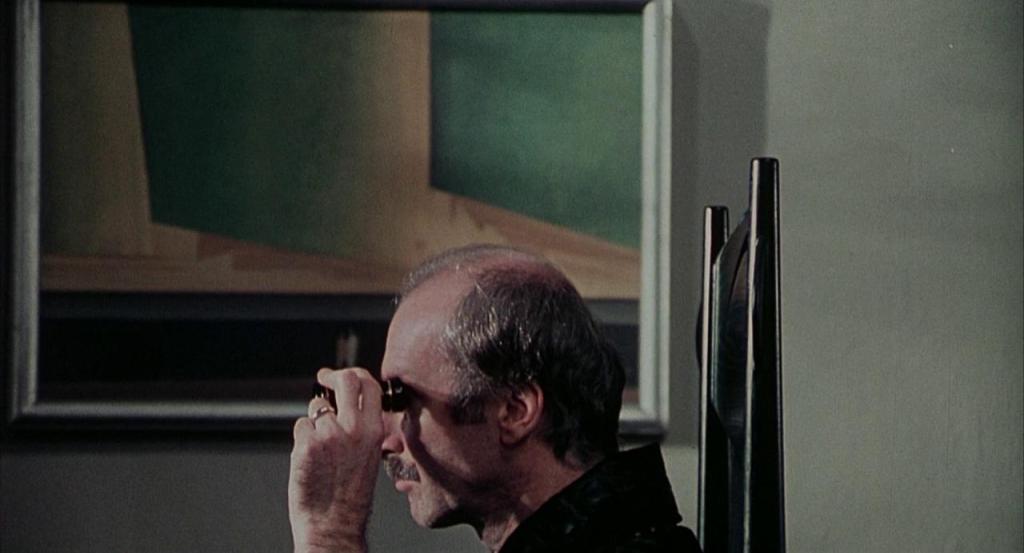
Perhaps no other film better solidifies a work of dark nihilism than Pier Paolo Pasolini’s Salo, or the 120 Days of Sodom (1975). If a more reckless and dark infatuation of cinematic nihilism needs a form starting point, then this film, faithfully and authentically based on a work by the Marquis de Sade, fits the bill perfectly (Pasolini, 1975). Salo’s unrelenting depravity and cruelty inside of a film where cruel and violent sadists survive and thrive by the end of the film is an example of pure and uncomfortable nihilism, a film that features no anti-heroes or heroines at all, just pure evil and soulless individuals in positions of power that destroy the lives of teenagers in virtually every physical and mental way imaginable. The film’s negative reputation and lack of acceptable box office revenue managed to cast serious doubt on unfiltered nihilism. Perhaps because of this, world filmmakers began to fashion a more relatable and acceptable brand of cinematic nihilism with the arrival of nihilistic films that center a morally ambiguous protagonist as the focus of the narrative, an anti-hero or heroine. The anti-hero or heroine can be found in films as far back as the 1930s, but with the rise of all-out realistic filmmaking free of censorship in the 1960s, this brand of existential nihilism began to take hold of the popular film-going imagination.

In the last half-century of cinema, existentialist and nihilistic filmmakers have flourished largely within the indie film circuit. In Europe, filmmakers such as Michelangelo Antonioni, Pier Paolo Pasolini, Rainer Werner Fassbinder, Ingmar Bergman, Catherine Breillat, and more began to fashion their artistry within a range of films that allowed it to be okay to strip away a person’s very humanity on screen. In Asia, filmmakers such as Takashi Miike, Zhang Yimou, Seijun Suzuki, and Nagisa Oshima further expanded upon the philosophy’s universal truths to help elucidate how existential nihilism was viable and authentic in virtually every culture and ethnicity across the globe. Films started to become more eclectic, and intertextuality, coupled with a disintegration between high and low culture, high and low culture film forms, and fractured filmic identities, began to become the norm after the age of the Italian neorealists in the 1940s and 1950s. That which was once taboo was becoming the norm and perfectly acceptable now that films were being fully integrated into the popular consciousness as art, and not just a formalist point of view that always held that films were only viable as pure entertainment.
Existential Nihilism Through Anti-Heroes & Anti-Heroines in Film and Television
Finding a viable qualitative analysis in existential and nihilistic cinema is best suited by seeking to extract the meaning from the values and actions of anti-heroes or heroines in these films and series. In seeking meaning from existential nihilism in cinema, how we arrive at our opinions, and how these opinions shape our own individual authority to form our beliefs or viewpoints in the wider conglomerate of our culture, is the main impetus for how we see value in anti-heroes and heroines. Humans are inundated with endless individualistic opinions, but there are many problematic opinions, just as there are substantial and more objective opinions. Therefore, what one viewer may see as existentialist, another may just as easily see character behaviors or actions as an example of psychological ill-health, even if there are no signifiers in the diegesis of the film that point to mental illness. But this also brings about some problems concerning knowledge since the ancient authors that knowledge derives from are in and of themselves, perpetrators of subjective opinions, therefore, there is no rhyme or reason for any one viewer to arrive at one opinion whereas another may see a character’s actions as an example of existential nihilism. That leaves cold, hard facts, and most of these facts and certainties are only truly legitimate if something can be seen and believed within the world of the film.
Furthermore, many radical filmmakers often view their own auteurship and the spread of their ideas and knowledge as something that can typically be divided into those who take it as an authority, and then to those who still question and conduct evidence or comparative thought on an idea from the film diegesis. Within this collective assemblage of thoughts, ideas, and meanings, we arrive at the essence of what film theory is. Existentialist nihilism in cinema lives and breathes by meanings, and this is part and parcel of what film theory itself is all about. Finding a qualitative analysis through the lens of existential nihilism can broadly be found by examining the traits of hopelessness or a pondering of life’s wider meaning beyond a societal status quo, in addition to a more nihilistic course of actions, such as a road trip from hell that involves murdering people at random in a film like Oliver Stone’s Natural Born Killers (1994). But along the way, multiple meanings can be extracted from these films since the broadness of individual opinion is inescapable.
There is perhaps no wider conglomeration of existential nihilism’s proliferation in film and television characters than the rise of Postmodernism and its loosening of strict, censorial oversight in cinema beginning in the 1960s. Postmodernism plays out in all artistic ventures related to theory. One example of existential nihilism in cinema that can be used to explore this construct is Clint Eastwood’s Unforgiven (1992). This film is widely hailed now as a postmodern Western film; the film explores themes such as good, evil, and the gray areas that exist between the two extremes, as well as positions the film’s central character as a quintessential anti-hero–a mix between good and bad, which widely differs from the era of the classic and stoic John Wayne type of westerns (Eastwood, 1992). Postmodernism is a great way to explore the theme of a work of art in a modern and reflective context when judged against the common history of a theme.
Poststructuralism within film theory can also be used to find qualitative analytical frameworks for existential nihilism in cinema. Poststructuralism is concerned with studying any given signifying phenomenon where an underlying structure makes the signifying act possible and governs it in some way. Ultimately, Poststructuralism is valuable in discerning the essential tenets of ideology and common sense and presenting the various strains of modern thought that can sometimes promote or go against these essential structures that have defined critical thinking for so long. In the 2010s alone, Poststructuralism was on full display in how various ideologies, many surrounding politics, and even diverging social issues came into play and began to present divergent interpretations of even the most essential and evidential of facts and certainties. The re-introduction of religious rhetoric when society began to open more to LGBTQIA+ rights, as well as the idolization of strongman policies in various world leaders, which was a burgeoning impetus that helped existentialism to prosper as a philosophical insight after the chaos imposed by various strongmen throughout World War II, are but many recent examples.
Post-Structuralism in film theory can be seen as far back as the 1940s when looking at film history and observing the shift in filmmaking and storytelling styles away from the larger objective and often bland types of films being made in the preceding forty or so years of the medium. Post-Structuralist film theory is a gold standard of sorts because it would be almost unimaginable to try and theorize on a film’s meaning if a multitude of interpretations could not be made and debated between scholars. We need to be able to deconstruct the meaning of a film to fully elaborate on just what a film does, and in many ways could mean, based on many different signs and signifiers gathered from a myriad of film viewers. This is how a qualitative analysis for existential nihilism can be arrived at within cinema. Thorough examples will be needed to understand how this can be achieved.
The Rise of the Anti-Hero and Anti-Heroine in Twenty-First Century Television
From its inception in the early 1950s until the turn of the century in the 1990s, the medium of television was long thought of as a safe space for viewers who simply wanted neat and tidy stories that could be wrapped up in thirty minutes to one hour each week. These stories also took on the mold of procedural or lightweight stories in which heroes and heroines always overcame adversity and reestablished the hollow ideal of patriotism or morally overt virtue. The film worlds of Fellini, Pasolini, or even American auteurs such as Martin Scorsese or David Lynch were nowhere to be found on the small screen, which was seen as a box of feel-good and escapist entertainment that any traditionalist or ultra-conservative viewer could feel safe within. But oddly enough, one of these film auteurs, David Lynch, created a polarizing and bizarre television series in 1990 that would air on the normally safe and family-oriented ABC television network, Twin Peaks (ABC, 1990-1991).
Lynch and Mark Frost’s series was cinematic, ambiguous, mystifying, and never afraid to abandon story threads completely or only return to them many episodes later. The linear nature of the television drama became upended by this series, but the lack of a central character to root for outside of the wholesome and tidy prototypical protagonist was not evident in the series. This would all change with the arrival of HBO’s The Sopranos (1999-2007) at the start of the twentieth century’s final year.
Here was a series that became so much more than what it was originally advertised to be. Upon its premiere, the series was promoted as being about a New Jersey mafia boss who sees a psychiatrist to treat depression. This was almost meant to sound satirical, and this is what many latched onto in the pilot episode’s odd mixture of dark comedy with topical issues such as mental health and parental issues. But as the series began to unfold, and up until its final and abrupt cut to black in the summer of 2007, The Sopranos firmly established that it was a story about so much more than the trials and tribulations of a turn-of-the-century mob boss. It was a series about the death of the American dream, the constant struggle between the ego and superego in a family full of criminals, it was about mental anguish, parental disaffection, and most importantly, the series was heavily rooted in existential nihilism.
Tony Soprano (James Gandolfini) was not just a tried-and-true anti-hero; he was also an anti-hero who was decent in his dealings with his children and worldview but firmly established on a collision course to a tragic fate. Early in the series, he tells his psychiatrist (Lorraine Bracco) that he knows full well a man in his position will either end up in prison or the cemetery. But David Chase and his writers spend eighty-six hours examining one of these fates that defines both the human condition itself as well as the central tenets of existential nihilism: death. The Sopranos is a meditation on death, and the unknowable uncertainty that we all must grapple with when pondering the end of our lives. This is contrasted with a narrative that examines characters that always strive to be a cohesive unit but seem determined to destroy themselves and the lives of others on their spiraling descent to a tragic end. Tony, his wife Carmela (Edie Falco), and their children all engage in strong levels of hypocrisy to mask the root of the income that provides their lavish lifestyles, that being their father’s crimes, and several murders, that pay for their opulence. Carmela Soprano hides behind a staunch conservatism and Christian doctrines, yet she feels no remorse in criticizing others who try to rise above the hypocrisy of what they project to the outside world, yet suppress in their day-to-day lives.
Chase and his writers present a facade that engulfs the characters while allowing them to feel safe in living a normal, opulent exterior in the suburbs, but tidily glides over the fact that theft, inequality, and homicide are the results of the material possessions they cling to. Furthermore, characters that seek to do right by society’s laws or seek to escape the violence and depravity that exists around a life financed by crime, typically suffer cruel and unjust fates, yet the same fates await those who administer the crimes yet reap the rewards that American capitalism promises each American can achieve if they only work hard enough. But we also see the reality of the situation affect those within the inner crime circle. Towards the end of the series, Carmela frequently has thoughts of life being fragile and death being eternal that are magnified because she knows she could easily lose Tony in the blink of a second, and her life will be truly meaningless because she has wasted it by putting her entire existence into his hands.
When she says what does it matter, it all just gets washed away in the end, this was clever on the part of the writers because in a way, she was justifying her and Tony’s lifestyle and crimes to absolve herself of the major guilt of it, but what she is saying is also a universal truth for the human condition no matter a person’s circumstances. We all put so much worry, guilt, and judgment into life, and in all honesty, it really does not matter; we are all insignificant, no matter what we do, we all die, and we never return to this life. The series ends during a family dinner between Tony, Carmela, and their children at a diner plucked straight from the Leave It to Beaver 1950s. Tony has received news that he will likely be indicted on murder charges, and a rival mafia family may seek to have him killed to remove him from an ensuing power struggle. There is tension in this scene as mysterious characters fill and disappear from the screen. Tony looks up as his daughter is entering the diner, and the screen cuts to silent, pitch-black darkness. Existential nihilism supposes that death is simply a passage into oblivion, like what occurs at the end of this series.
After The Sopranos cuts to darkness, and the tragedy of Tony Soprano’s life concluded one way or another, the characters’ moral ambiguity caught on with television writers who now felt safe in exploring characters that do both heroic and vile things on TV. One of that series’ writers, Matthew Weiner, expanded upon the anti-hero possibilities when he created Mad Men (AMC, 2007-2013). Set during the 1960s, an age when Postmodernism and philosophies like existential nihilism were gaining further ground in art and storytelling, the series explores a cosmopolitan advertising executive named Don Draper, as well as his disaffected wife Betty, and the corporate-minded sharks he shares his days with at a high-level advertising firm in Manhattan. Like The Sopranos, Mad Men was also interested in peeling back the layers of what it means to be a human being in a post-Enlightenment world. An age when all the ideals of enlightened existence have been saturated and analyzed to the point of producing new trends or modes of thinking as commodities to be purchased by the idealistically starved.
Mad Men is a series that takes its time in revealing an existentialist meaning based on character interactions and ultimately, their actions. For people like Don Draper, Betty Draper, and even the idealistic turned corporate drone Peggy Olsen, finding success in life is far too easy a proposition for them; perhaps they are too smart for their own good since their easy success and brilliance at what they do eventually creates boredom in their lives. The character of Betty Draper, like Carmela Soprano, is an anti-heroine in beguiling ways that do not immediately become clear to the viewer. Betty starts off as a wife of opulence, where she transitioned seamlessly from a childhood of opulence as well. She was a model and still finds it important to hold onto a youthful figure to avoid succumbing to the outer exterior of domesticity. Beauty and aesthetic appeal have defined her entire life to the point where she cannot picture a life worth living once her beauty begins to fade with age. Her enormous weight gain in the middle of the series finds her trapped in a fantasy world where she still views herself as a model and her obesity as merely a temporary hiccup that she can suppress and shed away.
Betty’s character is tragic not just for her narrow view of what life can be, but also because she is diagnosed with terminal lung cancer in the series finale. She never got the chance to grow and evolve into a more peaceful existence, an existence without competition or obsessive upkeep. Similarly, Don Draper also evolves in the final episode. When he is in a meeting with his firm, and seemingly on top of the advertising world, he simply gets up, walks out of the meeting, and never returns. Don can accept the most freeing aspects of existentialism, even though many would categorize his abandonment of such privilege as nihilistic behavior. He finds inner peace roaming the West as a vagabond for a time, but not before his creative mind comes up with another advertising blockbuster campaign. No matter what the push and pull factors of our lives present to us at any random moment, our need to survive and thrive never diminishes.
Another late-2000s series that explored an anti-hero and anti-heroine was Vince Gilligan’s Breaking Bad (AMC, 2008-2013). Here was a series that took the anti-hero narrative device and established its brilliance in a hard-to-replicate or expand upon future. Walter White, a self-loathing, retiring, beaten, egotistical, and bitter high school chemistry teacher who became a teacher only after he sold his stock in a potentially lucrative chemistry enterprise out of pride. He now lives in a lower-middle class and has a problem with this. After a cancer diagnosis, Walter White turns to cooking crystal meth to support his family after he is gone, but as the series progresses, we learn that it was his desire to break bad that truly brought this about. Walter White is an example of a destructive nihilist. No person, either past or present, is wholly good; that is a myth that people extort to try and rise above the fray of flawed humanity. This is why many people take for granted that this show is ultimately about saying much more about human behavior and perception than it is about telling a great crime story. Before he broke bad, Walter seemed to have mired himself in pride, ego, and self-loathing. He was a resentful and depressed Joe Everybody because he lacked the spine to stand up for what he believed in or to fight for his ambitions, which created years of resentment within him. He distanced himself from survival of the fittest because playing along the margins and sidelines was easier and non-confrontational.
Most of the characters are motivated to break bad because Walt did it, and many others already did it years ago and are riding high from doing it. This is a show about regret, pleasure, pride, ego, control, nihilism, and hypocrisy. Walter’s wife, Skyler (Anna Gunn), is an example of an anti-heroine within an entertainment fandom rife with misogyny. Her character’s passive hatred is rooted in the fact that her misdeeds of infidelity to break bad and ultimately help her husband launder his drug money are somehow worse than Walter White’s actions. A powerful woman who decides to break bad and who cannot be easily controlled and manipulated by her sociopathic husband is somehow worse in the eyes of the toxic masculinity of some viewers. Such is the wider hypocrisy that permeates around each anti-heroine in fiction, but specifically television. This revolves back to the importance of Poststructuralism in extracting meaning within film theory.
It is often important to find universal truths and meanings from a human perspective, and explicitly a male or female lens when it comes to a wider philosophical analysis through something like existential nihilism. This philosophy’s meanings are reflective of the human experience as a critical thinking species within the wider sphere of a chaotic and unknowable universe. The petty dynamics and hypocrisy that exist in focusing on a person’s gender completely miss the point. Seeking meaning in existential nihilism relates to how everyone seeks to find meaning and fulfillment, regardless of the strict doctrines and policies that define how those in power dictate within the structure of a society.
The Present and Future
Existential nihilism is a philosophical insight that can be arrived at when the need to think beyond religious or spiritual doctrines collides with the objective and unavoidable realities of an individual choosing to fulfill their life’s purpose in whatever way they see fit. Narrative storytelling, specifically in the mediums of film and television, allows such probing and provocative insights to flourish when filmmakers and screenwriters dedicate their art to bringing these complex themes to life. Since the writings of Nietzsche in the late nineteenth century, which coincided with the rise of filmmaking, the ability to tell these types of stories has evolved widely in the succeeding century-plus. Whether it is narratives that explore anti-heroes or anti-heroines who fail to find the differences between what emotions are important and which are primitive or, be it the films and series that pit morally ambiguous characters against their own inherent fallacies, and allow the characters to go on a complex odyssey to reach some semblance of equilibrium before death, existential nihilism permeates across the large and small screens in dazzling and kinetic form.
To fully understand when a film or television suggests this philosophy, both a qualitative and content analysis are necessary to arrive at meaning. The film or series’ form is also a key indicator of what the aesthetic principles of philosophy in film typically entail. A wide array of filmmakers and long-form television series creators have firmly established existential nihilism as a viable aspect of film theory in the post-World War II world, when the philosophy started to permeate across the world. Filmic art is not always about ensuring a viewer has a comfortable and pleasurable hour or two of escapism; it is also tasked with reflecting the full scope of human experience, and a need to find some sort of tangible meaning to existence when the answers or theories are far too vague. The horrors and disappointments of life for the realist are unavoidable, but these films and series offer a way to enrich a viewer’s thinking to arrive at a point of understanding and commonality for those who think the same way they do.
 Charles Switzer