What does it mean to fly?
In 1978, American author William Wharton published a novel called Birdy, and this literary opus managed to combine the very best of postmodernist allegory with a poignant coming-of-age story inside of a main character’s fractured and complex psychological pathology. In the novel, the title character, played by Mathew Modine in the 1984 film adaptation, was a young adult who lived with a stern, post-Depression, World War II set of working-class parents in the blue-collar suburbs of Philadelphia. He spends his days immersing himself in the lives of his pet birds, and even goes so far as to picture himself as a bird, which is the surface-level allegory of Wharton’s prose; Birdy would fit seamlessly inside of a Freudian analysis of aviary dream imagery as a metaphor for escaping the harsh realities of working class life–a lifestyle that has never been too kind to those who daydream and exist in the abstract.
When British filmmaker Alan Parker, director of numerous dreamlike odysseys, brought the book to the screen, his esoteric, vividly visual sensibilities gave the material a new dreamlike age in the lush New Wave aesthetic of the 1980s.
From Novel to Screen: Wharton’s Birdy and Parker’s Vision
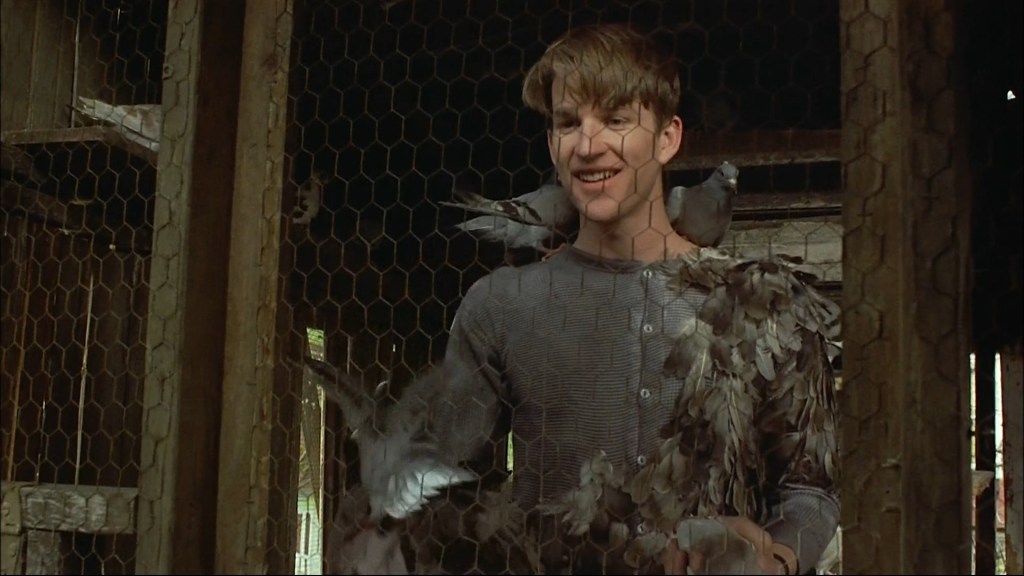
Birdy has one friend named Al (Nicolas Cage), who is the same age but a classic example of an all-American, virile, and masculine working-class teen. The novel is filled with dream imagery and long monologues inside Birdy’s head, which means a film adaptation was likely not in the cards, considering pre-CGI technology. At its heart, Birdy is about allegory, and specifically the fight or flight stimuli that birds get to use in the literal sense; but how does this dreamlike imagery mixed with psychology best represent postmodern film?
But with the right kind of postmodernist filmmaker, the visual balancing act could be achieved, and that is exactly what Britain’s Alan Parker did. Birdy was a novel filled with complex psychological elements–so much so that the thematic material of the novel would need to be framed around a sense of normalcy in order not to be a wholly experimental film. Parker was certainly capable of bridging the divide between frenetic and evocative imagery and regular, everyday narratives. His films, Midnight Express (1978) and Fame (1980), are two such films that exemplify his trademark style, which can best be described as depictions of various circumstances and situations in life and the myriad emotions that come with them through the prism of a hazy dream. His direction of Pink Floyd: The Wall (1982) would cement his singular ability to capture the esoteric through mood and ambiance; therefore, Parker’s sensibilities were perfect for bringing Birdy to the screen.
Fight, Flight, and Freudian Film Analysis Desires
In the film, Al and Birdy, two young men who grew up together in the slums of South Philadelphia, have returned from Vietnam (replacing World War II from the book) as war-ravaged victims. Al’s face is mutilated, and his leg is shattered. Birdy is confined to the psych ward of an Army hospital; he hasn’t spoken a word in three months. Through a series of flashbacks, the film retraces their adolescent adventures. Al is a gregarious teenager who is a high school wrestler. He firms himself up from the outside to survive in a hostile environment. His violent father, a garbageman, is the enemy, and nubile young girls are there for the taking. Birdy is a reclusive and dreamy boy who builds himself up from the inside using his imagination to sidestep an oppressive mother and indifferent peers. Birdy and Al become friends; they are yin and yang, but the emotional connection is maintained despite their pulling apart based on diverging interests.
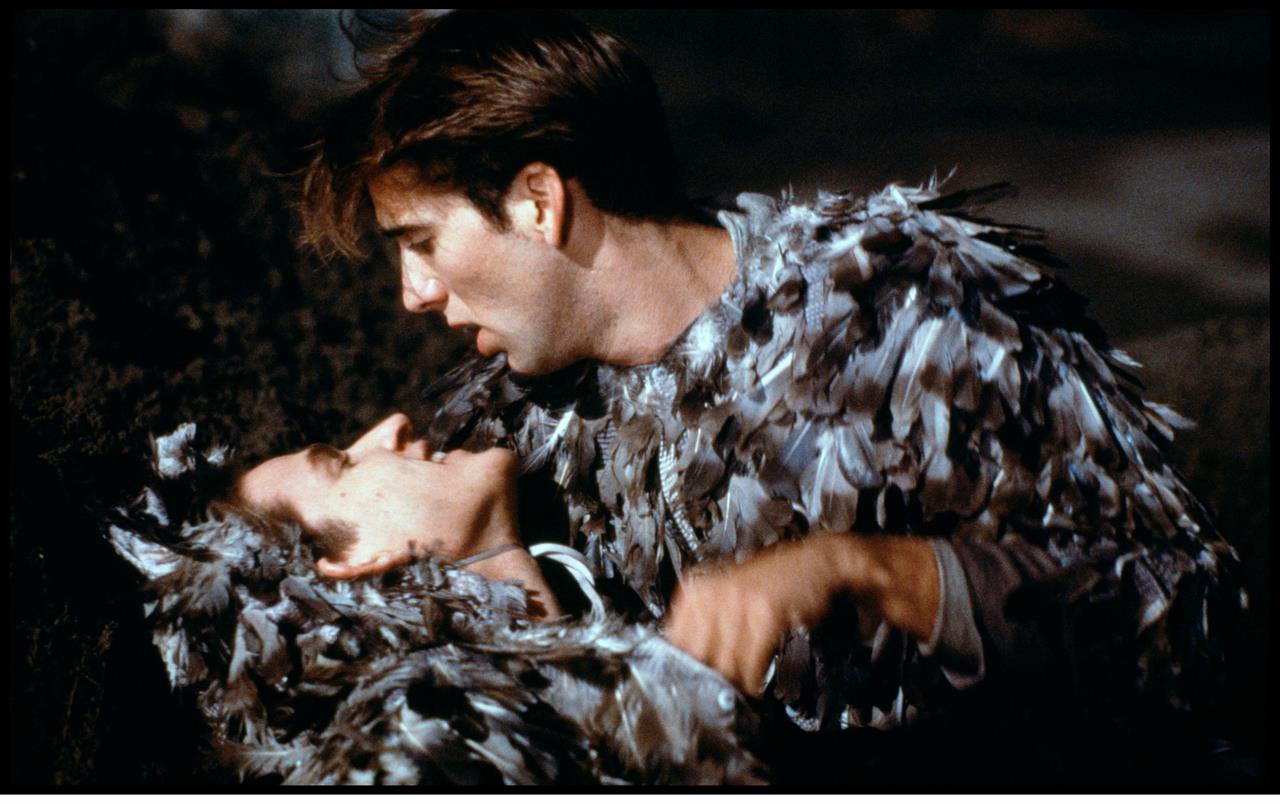
The main nexus of the film’s central thesis is that Birdy is fascinated with birds; he builds a cage for pigeons in his backyard, then makes feathered suits for himself and Al, so that they can get close to the birds without spooking them. When Birdy falls off a gas tower during one expedition to collect pigeons, he mistakes falling for flying and becomes thoroughly hooked on the dream of flight. In Freudian psychology, Birdy’s yearning to fly like his pet birds, and perhaps even a mixture of a desire to anthropomorphically become a bird, are best understood inside of his id, repression, and a distorted sense of automaton replication in how his desires are so intense that we the viewer sometimes wonder if he even wishes to be human any longer. Parker excels at visually representing this distorted consciousness, but since the effects of the war leave Birdy confined to a military mental hospital, are we, the viewer, meant to take away from the film that the lead character is mentally ill?
Birdy’s Psyche: Mental Illness or Resistance?
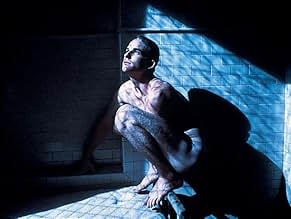
Any good film takes viewers to another world, holding their attention within the rules of that world to say something, anything. This is as true for science fiction, western and horror as it is for films about mental illness, but Birdy’s psychology is not easily identifiable inside of mental instability; that is not to say that his trauma from the war, which reconciles him into a crouching, bird-like posture staring up at the sky through the window of his padded room, is not a byproduct of psychological trauma, it cannot be easily reconciled that his life before the trauma of the war was textbook mental illness. The esoteric is heavily identifiable in the art of the Postmodern Era, which includes numerous films since the establishment of the movement in the 1960s.
Postmodernism and the Surface of Reality
But what about Birdy is inherently postmodern? For one, Parker and his crew decided to update the novel from a World War II setting to a more early 1980s-centric, Vietnam War setting. The film is Postmodern simply because it explores the colonial struggles and questionable ambiguities that war left within the subconscious for artists. Many of these narratives typically present a dark view of the human condition, images of chaos and random violence, death of the hero, emphasis on technique over content, and dystopian views of the future. Therefore, and in a fragmented way, certainly in Parker’s stylistic choices by way of Wharton’s prose, various questions arise on the ways in which film narratives represent visually both the inner and, in some ways, the outer realities of our own existence in the corporeal world. Birdy can perhaps best be understood by looking through this Postmodern prism, not through darkness in the human soul, but by the need to transcend the fight or flight response.
Identity and Repression
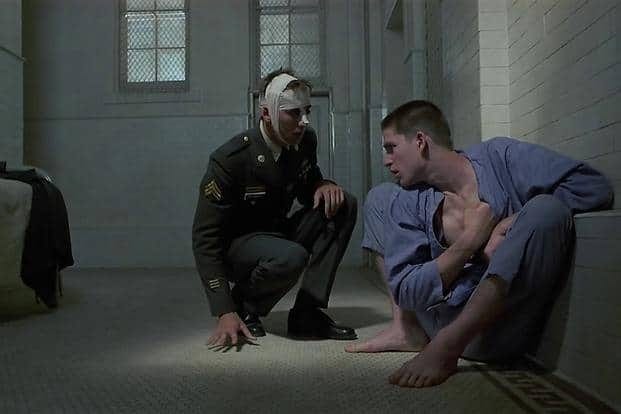
The film also pushes back against a myopic societal view of the esoteric, which can also be understood as the other. In an electrifying scene at the end of the film, Al holds Birdy in his arms. In an angry, sad, and despairing monologue, he affirms their friendship and curses the world for violating them and their hopes for the future. Birdy chirps a few words and comes back to reality on the wings of Al’s need. They escape the cell, and on the roof of the hospital, Birdy tries one last fling at flying and freedom, which is filmed as to make the viewer believe that Birdy is jumping to his death, only to show him alive and well, as the jump was maybe five feet to a lower level. Birdy looks up at a frantic Al and simply says, what? Is the ending a cheap gag to insert humor, or is Parker trying to convey that flights of fancy, even in complex psychological frameworks like the inner workings of Birdy’s mind, are simply an example of Birdy shaking off some fantasized Freudian concept of repression?
In Freudian psychology, repression is the forgetting or ignoring of past events that were traumatic in some way. What is it within Birdy’s life that would have been so traumatic, namely in his childhood, that would have him visualizing his entire life as a bird or as a yearning to become a bird? Birds represent flight within the literal framework of allegory, and flight is one attribute that humans were not blessed with in terms of biological anatomy. We fashioned machinery to allow us to fly, but we cannot soar into the skies and experience flight as a natural representation of our inherited gifts from the natural world. Birdy grew up in an urban, working-class environment; the kind of childhood that revolves around financial insecurity, bickering parents, and situations where the imagination is stifled in lieu of just being good enough, and strong enough, to aspire to a job to pay the bills.
Postmodern America and the Crisis of Conformity
Birdy’s father is ultra-masculine, a full and true example of the patriarchal stronghold on working-class life circa the 1960s. His mother is domineering and pessimistic, always screaming and ranting about his interests and wishing him to be like the other neighborhood boys, i.e., a prototype of the man she married. To be different as a child and certainly as an adolescent is to be hopeful that the parental and social structure around you is welcoming of this difference and variety–something that has long been lacking in American culture. His trauma may not have been physical or sexual in nature, but was more likely from inflicted home and sociological scars on his imagination from a textbook social dynamic rooted solely in survival or quick pleasures where they can acquire them. How is this Postmodern?
The stories of postmodern cinema are particular stories that work through very particular themes. The Vietnam War setting in the film is an example of America’s obsession with Americanizing foreign nations, such as how the need to normalize and Americanize Birdy himself into what Al is becoming–the virile, boy-next-door type who loves his country and is excited about American imperialism. Now, obviously this can be said of any period of history or culture, which is precisely why it must be said about postmodern cinema.
To me, the postmodern cinematic marketplace is dominated by American products, indeed, even our entire existence within the American dynamic is rooted in consumerism. Postmodern cinema celebrates, at surface level, its own exchange and use value. We are told how it was made, how much it cost, and what it is about. This is especially true for what, in a sense, is the often illogical way in which films like Birdy are advertised, the trailer for the film focuses on the friendship, almost even to suggest a National Lampoon’s type outing, which is so anathema to the film itself it may as well have been made on Mars and repackaged as an American product next to Ghostbusters and Gremlins in 1984.
Repression, Resistance, and Transcendence
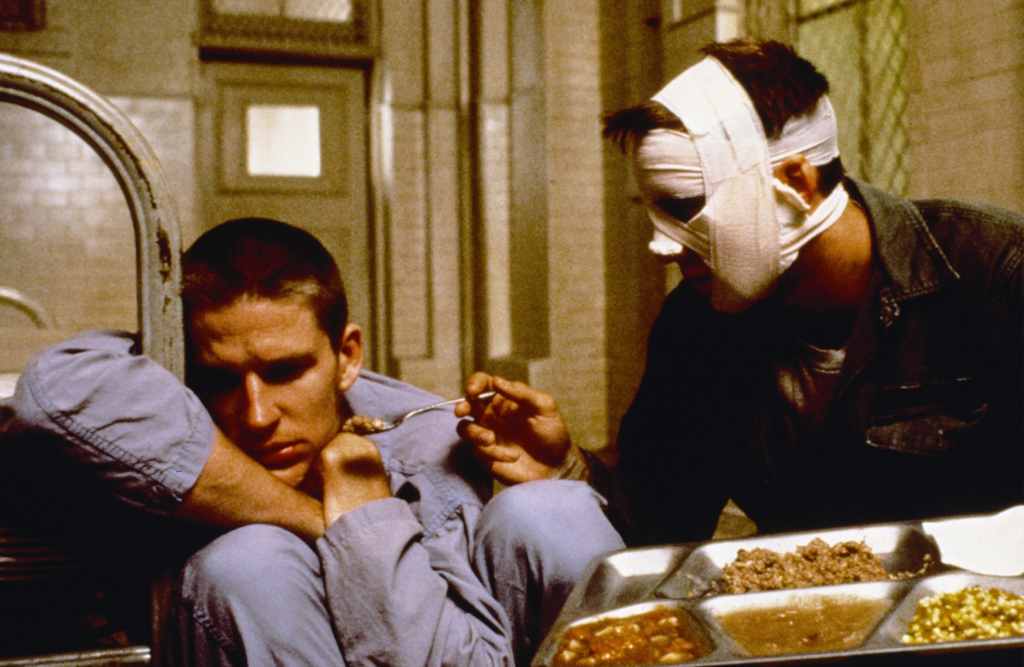
Most descriptions of Birdy tend to dwell on what seems to be the central plot, the story of the two friends who go to Vietnam and are wounded, and about how one tries to help the other return to the real world, et al. But Parker’s central message and aesthetic are far too hypnotic to leave it all to surface-level narrative. The war footage in the movie is fairly routine, and the challenge of dragging Birdy back to reality was a good deal less interesting than the story of how he arrived at the strange, secret place in his mind. This is where the divide and mixture of psychology and postmodernism intersect so brilliantly within the film. There is one sequence in the middle of the film that is simply Birdy lying on his floor naked, next to his birds within their cage. Parker’s Skycam camera pans around the room to the swells of Peter Gabriel’s evocative score, and then flies out of Birdy’s bedroom window and into and above the city. The camera becomes Birdy’s POV, and we, the viewer realize that he wishes more than anything that he could fly through the city and into a new environment and experience.
The main example of both psychoanalytic interpretation and postmodernist thought as it relates to the fight or flight response in Birdy revolves around the exploration of differences and the other, of which Birdy is certainly classed within. The main purpose of psychoanalytic research is to gain an understanding of the unconscious. This, therefore, is the analysis of the film that establishes context for the viewer, whereas postmodern cinema is all about examining what the surface of the narrative presents to the viewer. Birdy’s social circumstances, his friendship with Al, the trauma of the war, etc. Freud proposed that a person’s awareness existed within layers of the psyche, and some thoughts lay just below the surface. This is why Birdy is a great example of psychological allegory in film that lifts the viewer up from the mundane of the ordinary, in aimless lives that bring no satisfaction to the people living them (Birdy’s parents, a pre-Vietnam War Al), and allows us to view the world through Birdy’s unique eyes.
Birdy has no desire to fight, as we can see in the brief Vietnam War scenes, and his unwillingness to fight speaks not to some dereliction of imperialistic patriotism and vigor, but to his desire to live life on his own terms, on the terms dictated by whatever creator or origin story that people believe in–the surface-level acceptance of life being a brief and precious gift that should be cherished, much like how birds can simply fly away from the nonsensical small things that we humans are obsessed with to make life unnecessarily hard, if not downright miserable. Does Birdy want to fight, or is his distorted reality of flight more important in the grand scheme of things? After the war leaves Birdy unable to speak or communicate beyond perching like a bird, Al travels to the institution to see if he can assist in getting Birdy out of his near-comatose state. Eventually, he does, but not in an expected way. In the end, Birdy and Al erupt into emotional, ranting violence against an institution – the Army, America in general – whose only interest in making Birdy better is to get him back under control. Four decades later, not much has changed there.
Far more than just a Vietnam War trauma film, Birdy remains a masterclass in evocative, challenging cinema.
 Charles Switzer